







In the early decades of the Space Age, the skies above seemed closer than ever. Bold visions, like the Apollo mission’s lunar landings, ignited global imagination, and the rapid pace of exploration—Saturn’s moons, Mars rovers, and beyond—suggested that humanity’s reach would stretch ever farther. Space exploration appeared limitless, its frontier expanding with each mission, unveiling new realms and unknown frontiers for human ingenuity to conquer.
Yet, today, the horizon of space exploration may feel as though it is receding. The pace of groundbreaking missions has slowed, and economic, political, and technological challenges loom larger than ever before. The great ambitions of the 20th century, from colonies on Mars to permanent bases on the Moon, now face the harsh reality of finite resources and escalating obstacles.
This article explores the factors that have influenced the trajectory of space exploration in recent years. Is space exploration truly on the decline, or are we simply encountering a natural plateau? What are the opportunities and challenges shaping the future of humanity in space?
The Golden Age of Space Exploration
The history of space exploration can be divided into distinct epochs. The early days of the space race, from the late 1950s to the 1970s, represent the Golden Age of space exploration. The era was dominated by nationalistic fervor and Cold War competition, with the U.S. and Soviet Union racing to dominate the cosmos. Sputnik, Yuri Gagarin’s orbital flight, and the Apollo moon landings marked remarkable milestones in human history.
During this time, space exploration achieved feats that were once thought to be impossible. The Apollo missions captured the world’s attention, and lunar landings seemed to suggest that humanity’s place in the stars was inevitable. By 1972, the Apollo 17 mission marked the final manned journey to the Moon for several decades, leaving Earth’s satellite relatively unexplored in the decades that followed.
The Slowdown: Why the Pace Diminished
After the Apollo missions, the rate of space exploration significantly slowed. There were several key reasons for this, primarily revolving around the high costs, political shifts, and changing priorities.
1. The Cost of Space Exploration
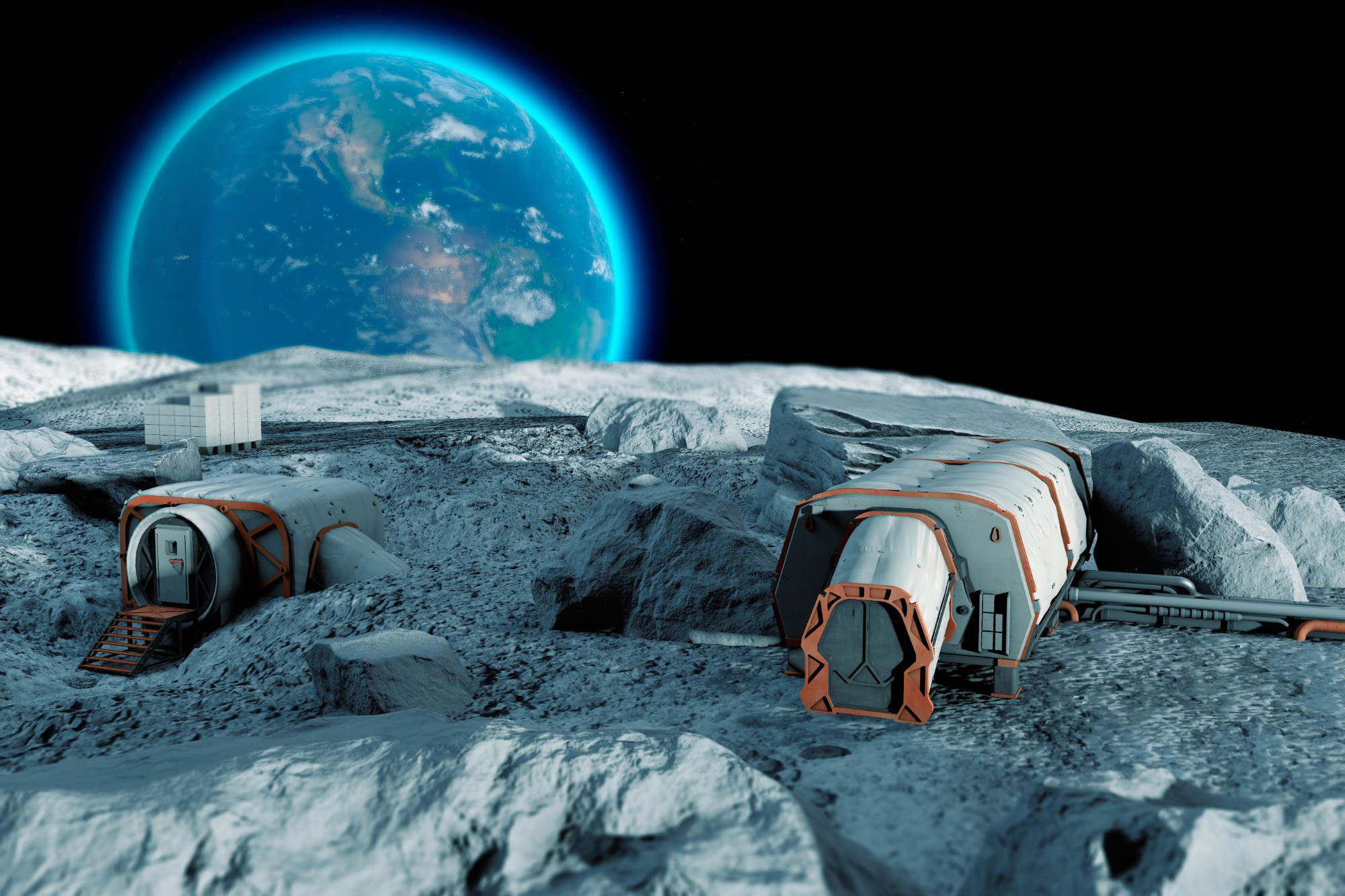
The expense of sending humans into space has always been astronomically high, and the Apollo missions were no exception. By the time the Apollo program ended, NASA had spent over $25 billion (roughly $150 billion in today’s money), and there were fewer political or economic incentives to continue similar endeavors. The costs, combined with the post-Apollo “space fatigue,” led to a gradual decline in funding for space exploration.
The Soviet Union, too, found itself diverting resources from space exploration in favor of more immediate national concerns. The Cold War competition that had powered so much of the early space race began to fade as the global political landscape shifted.
2. A Shift in Focus: Scientific Missions Over Human Exploration
Following the end of the Apollo missions, the focus shifted toward robotic exploration of the outer solar system and distant space. NASA’s space telescopes, the Mars rovers, and the Voyager probes all contributed to an era of groundbreaking scientific discoveries. Yet, while these missions were incredibly successful, they did not capture the same public imagination as the human spaceflights of earlier years.
The financial burden of manned missions meant that robotic missions—less expensive and less risky—became the primary tool for exploration. The Voyager probes, for example, sent humanity its first images of Jupiter, Saturn, and distant interstellar space, while the Hubble Space Telescope revealed the cosmos in unprecedented detail.
However, the lack of human presence beyond low-Earth orbit also meant that the dream of human space settlement or the colonization of other planets took a backseat.
3. Political and Geopolitical Distractions
The 1980s and 1990s saw several geopolitical shifts that took attention away from space exploration. The end of the Cold War and the dissolution of the Soviet Union meant that the rivalry that once drove space exploration was no longer as central. Meanwhile, political concerns in the United States, such as the focus on military conflicts, economic challenges, and shifts in political power, further pushed space exploration down the agenda.
The International Space Station (ISS), launched in the 1990s, was one of the few major human ventures in space during this time, but the focus here was more on international collaboration and scientific research rather than exploration. It also marked a shift toward permanent human presence in space, yet without any particular goals beyond research.
4. The Challenger Disaster and Repercussions
The tragic explosion of the Space Shuttle Challenger in 1986 shocked the world and brought attention to the inherent dangers of human spaceflight. The disaster resulted in a pause in the shuttle program and a reassessment of space exploration priorities. Safety concerns grew, and the costs of maintaining and launching the space shuttles became increasingly difficult to justify, especially in light of other priorities.
Private Sector Involvement and New Hope
The 21st century ushered in an era where private companies began to take an active role in space exploration. Companies like SpaceX, Blue Origin, and Virgin Galactic have brought innovation and competition to the space industry, often undercutting traditional government space agencies on cost and efficiency. Elon Musk’s SpaceX, in particular, has emerged as a powerful force in reshaping the landscape of space exploration, with its reusable Falcon rockets and ambitious goals for Mars colonization.
This resurgence of private sector involvement has led to some optimism about the future of space exploration. The launch of reusable rockets and the promise of space tourism are tangible signs that space travel could one day become more accessible to the public. But this shift raises several questions: Is the future of space exploration truly in the hands of private corporations, or should space remain a publicly funded endeavor?
1. The Role of Government Agencies
Government agencies like NASA and the European Space Agency (ESA) remain central to the scientific, technical, and regulatory aspects of space exploration. The International Space Station continues to operate, and NASA’s Artemis program aims to return humans to the Moon by the mid-2020s. But as private companies continue to make strides in launching satellites, resupplying the ISS, and even planning for crewed missions to the Moon and Mars, the role of governmental space agencies may become less central in the years to come.
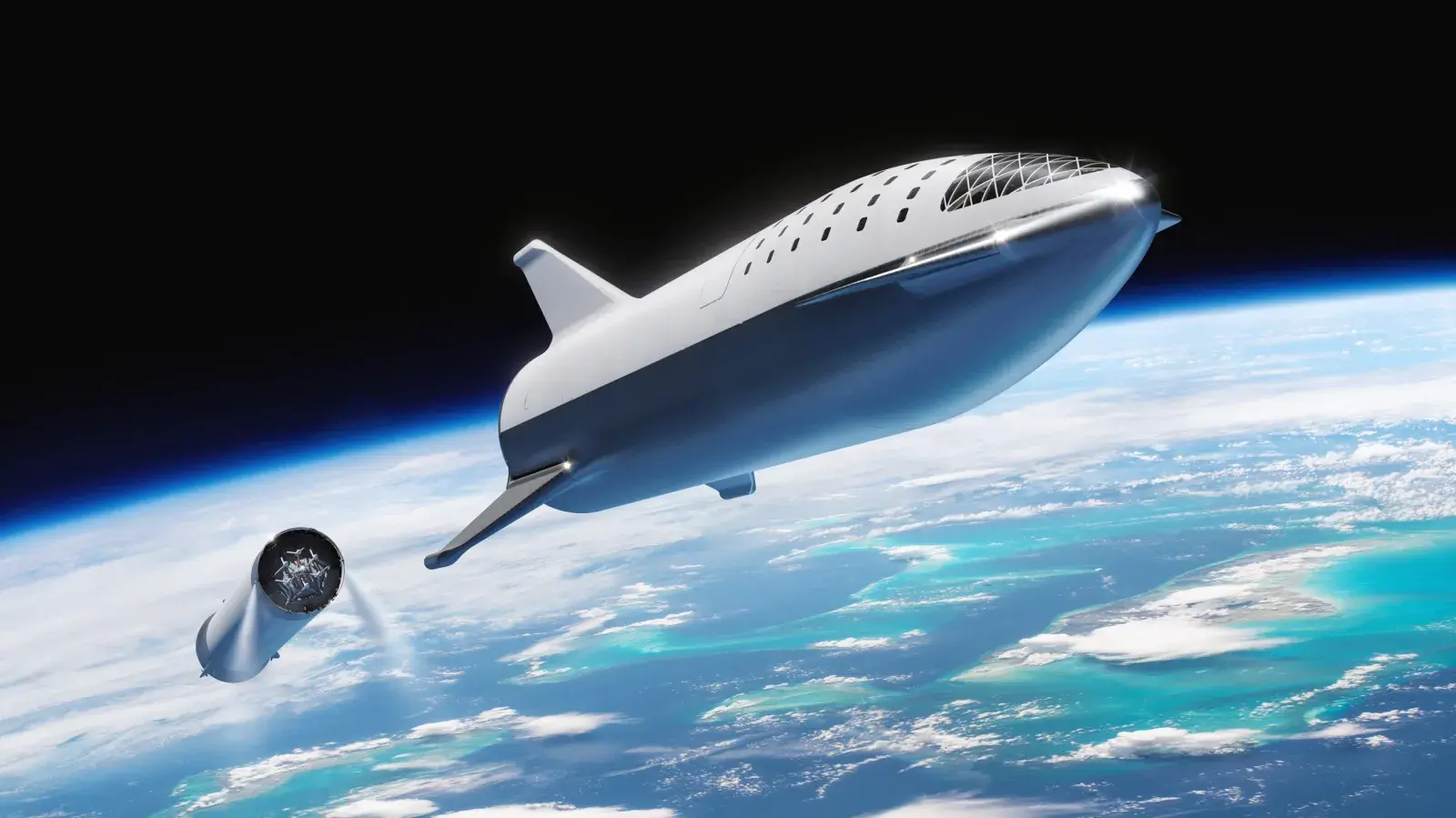
Governments still provide the bulk of the funding for space exploration, and their interests typically focus on large-scale scientific research, national security, and international collaboration. However, much of the excitement in the industry is now driven by private enterprises that see space as a potentially lucrative frontier.
2. Space Tourism and Commercialization
Space tourism, once the stuff of science fiction, is now on the brink of becoming a reality. Companies like Blue Origin, Virgin Galactic, and SpaceX are making significant investments in commercial spaceflight. Jeff Bezos and Richard Branson have both already flown to space, and SpaceX’s plans to launch private missions are moving ahead. However, the idea that space travel will become as common as air travel in the near future remains highly speculative, given the extreme costs and risks involved.
Technological Challenges
Space exploration is limited by several technological challenges, many of which have yet to be overcome. Despite recent advancements in rocket reusability, interplanetary travel remains a daunting challenge. Current rocket technology, while highly advanced, is still not fast enough to make travel to Mars or distant stars feasible within human lifetimes. The resources required to build self-sustaining colonies on the Moon or Mars are staggering, and we still lack the ability to protect astronauts from radiation on long-duration missions.
The need for breakthroughs in propulsion technology, life support systems, and radiation shielding is evident, and until these challenges are addressed, space exploration may remain confined to low-Earth orbit and the Moon.
The Psychological and Sociological Dimensions
The human element of space exploration introduces additional complexities. There are significant psychological and sociological challenges that must be addressed for long-duration space travel. Astronauts must contend with isolation, confinement, and the harshness of space, as well as the stress of extended missions away from Earth. The selection and training of astronauts have become a highly specialized field, and the mental well-being of crew members is now seen as a critical factor in mission success.
Additionally, questions about the ethics of space colonization and the potential consequences of human activity in space remain unresolved. Should humanity’s future be one of expansion into the cosmos, or should we focus on preserving and protecting our home planet?
Looking to the Future: Will the Horizon Recede or Expand?
In many ways, the horizon of space exploration is indeed receding, but that does not necessarily spell the end of humanity’s adventures beyond Earth. The challenges of space exploration are not insurmountable, but they are considerable. Private companies are breathing new life into the industry, and NASA’s Artemis program aims to reestablish human presence on the Moon in the coming decade, which could serve as a stepping stone for Mars and beyond.
Ultimately, the question of whether the horizon of space exploration is receding may depend on how we redefine our ambitions. If the goal is to plant flags and explore the unknown, then we may indeed be entering a period of stagnation. But if our ambition is to make space a more accessible, sustainable, and long-term frontier, the horizon may simply be shifting, waiting for a future generation to push the boundaries of exploration once again.