








Introduction: The Edge of Comfort
In the vast expanse of human experience, our comfort zones serve as the well-guarded boundaries of familiarity, safety, and predictability. These zones—both mental and physical—are where we feel most at ease, where the world seems manageable, and where the risks of the unknown are mitigated. But what happens when those boundaries are tested? When the horizon stretches beyond what we are used to, pulling us into new and unfamiliar terrains?
Expanding beyond our comfort zones is not just a popular motivational slogan; it is a profound psychological and existential shift. The act of stepping outside what is familiar can trigger a transformation, one that challenges our perspectives, enhances personal growth, and unlocks untapped potential. But it is also a space where discomfort, fear, and anxiety can thrive. Understanding what occurs when we push past our comfort zones requires delving into psychology, biology, and philosophy, examining not only the dangers but also the profound rewards that accompany this journey.
The Comfort Zone: A Psychological Perspective
To understand the dynamics of expanding beyond our comfort zones, we must first explore what the comfort zone is and why we gravitate toward it. Psychologists describe the comfort zone as a psychological state where a person feels secure and at ease, avoiding any perceived threats or stressors. Within this zone, individuals experience minimal anxiety and optimal performance. In this state, everything is predictable, and we are able to function without expending unnecessary cognitive or emotional energy.
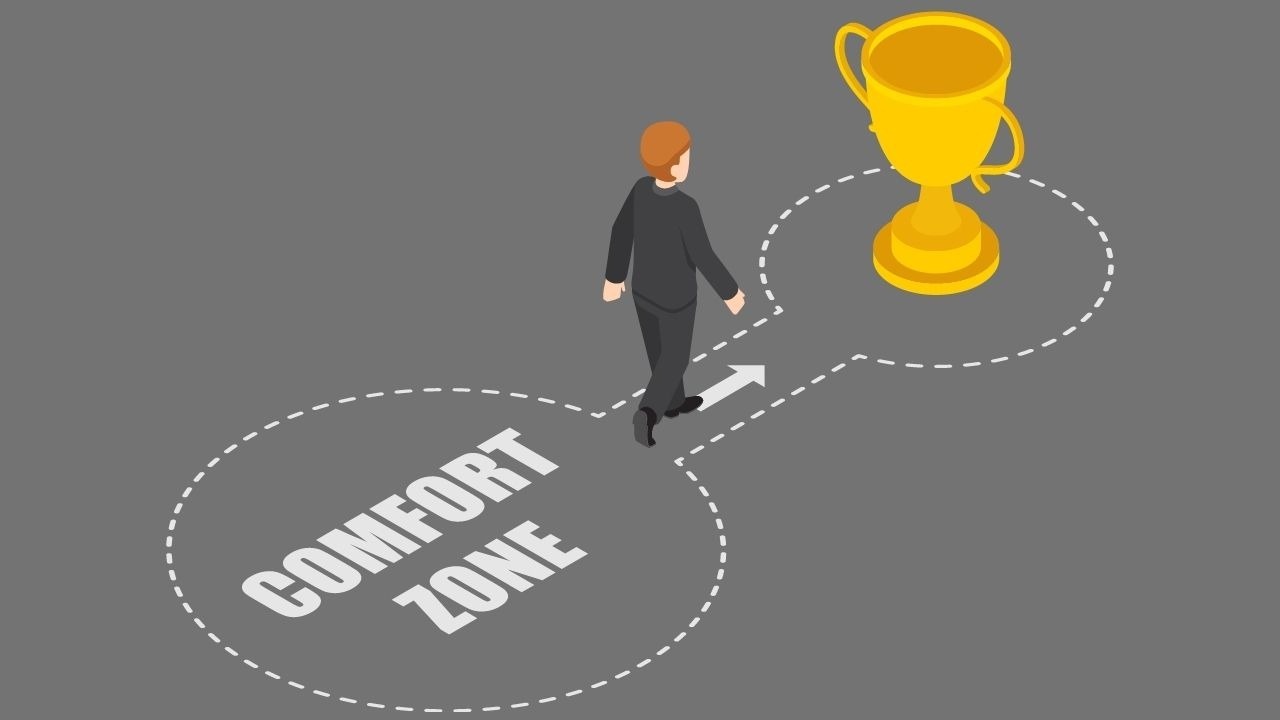
Comfort zones are defined by our habits, routines, relationships, and perceptions. They provide a psychological “buffer” against the unknown, ensuring that we avoid situations where we might feel incompetent or vulnerable. But this protective layer also has its drawbacks. While comfort zones provide short-term stability, they often prevent long-term growth and self-improvement. The brain, wired for efficiency, prefers known stimuli because it reduces cognitive load. However, it is through challenging the status quo and confronting discomfort that we experience true growth.
When we begin to step beyond the bounds of our comfort zones, we encounter the unknown—territory that tests our resilience, adaptability, and capacity to learn. But what lies beyond these boundaries?
The Biology of Change: Stress, Anxiety, and Growth
The biological response to stepping outside one’s comfort zone is complex and deeply rooted in our evolutionary survival mechanisms. The brain is hardwired to seek safety and predictability. When confronted with novel situations, our body responds by releasing stress hormones such as cortisol and adrenaline. These “fight or flight” responses prepare us to deal with potential threats, heightening awareness and focusing attention on immediate needs.
While these physiological reactions can be unpleasant, they are not inherently negative. In fact, they are essential for personal growth. According to research in neuroplasticity, the brain has the ability to reorganize itself by forming new neural connections in response to novel experiences. When we expose ourselves to new challenges, we stimulate the brain to adapt, learn, and create new pathways of thinking and behavior. In essence, by venturing beyond what is comfortable, we become mentally stronger and more adaptable.
However, the initial stages of expansion often bring discomfort. This is because our brains prefer the safety of the familiar, and change requires effort. The discomfort we feel when trying something new is a sign that we are activating new neural pathways, strengthening our cognitive flexibility. Over time, these experiences build resilience, making us better equipped to handle future challenges.
The Psychological Rewards of Expanding Horizons
While stepping beyond our comfort zones may be accompanied by fear and anxiety, it also offers profound psychological rewards. These rewards include a deeper sense of fulfillment, increased self-confidence, and a greater sense of meaning and purpose in life.
- Increased Self-Efficacy: As we push beyond our comfort zones and overcome challenges, we build a sense of self-efficacy—the belief in our ability to succeed in specific situations. This sense of competence and control is a key driver of motivation and well-being. With each success, no matter how small, our self-belief strengthens, empowering us to take on even bigger challenges in the future.
- Personal Growth and Learning: The process of stepping outside of what is known forces us to confront unfamiliar concepts, adapt to new situations, and acquire new skills. This fosters a sense of personal growth and learning. Challenges are not just obstacles to overcome; they are opportunities to evolve and develop as individuals. Every experience, whether successful or not, provides valuable lessons that contribute to our development.
- Sense of Accomplishment: The more we push our boundaries, the greater the sense of accomplishment we feel. Accomplishment is intrinsically tied to overcoming obstacles. When we expand our horizons, we achieve things that once seemed impossible, and this sense of achievement enhances our self-esteem and life satisfaction.
- Resilience and Emotional Strength: Continually confronting new and unfamiliar situations helps us build emotional resilience. Each time we step outside our comfort zone, we strengthen our ability to cope with stress, uncertainty, and adversity. This resilience not only benefits us in the short term but also prepares us for future challenges.
The Challenges of Expansion: Fear, Anxiety, and the Growth Paradox
Despite the many benefits of expanding beyond our comfort zones, the process is not without its challenges. Fear and anxiety are natural companions of this journey, and they can hinder progress if not properly managed.

- Fear of Failure: One of the most common obstacles people face when expanding their horizons is the fear of failure. This fear often stems from a deep-seated belief that failure reflects inadequacy or incompetence. In reality, failure is an inevitable part of growth. It provides valuable feedback and an opportunity to learn from mistakes.
- The Imposter Syndrome: Another common barrier to growth is imposter syndrome—the feeling that one is not qualified or deserving of success despite evidence to the contrary. This often arises when we stretch our abilities beyond what we believe ourselves capable of, triggering self-doubt and a sense of being a fraud. Overcoming imposter syndrome requires self-compassion and a recognition that growth often comes from stepping into the unknown.
- The Paradox of Growth: Expanding our horizons is inherently paradoxical. While the process of growth is essential for personal development, it also involves moments of discomfort, self-doubt, and fear. The very act of challenging oneself requires navigating this tension. Those who succeed in expanding their horizons are those who learn to embrace discomfort as part of the journey, seeing it not as a threat, but as a sign of progress.
- The Social Dimension of Comfort Zones: Comfort zones are not just personal but often influenced by social norms, relationships, and cultural expectations. Stepping outside these norms can feel isolating or even threatening. Social support is crucial in this process. Surrounding oneself with individuals who encourage risk-taking and who celebrate growth can provide the reassurance needed to take those first difficult steps into the unknown.
Real-Life Examples of Expanding Horizons
The process of expanding one’s horizons can be seen in many real-life stories of individuals who have taken bold steps into the unknown, whether in their personal lives, careers, or creative endeavors.
- Entrepreneurship: Entrepreneurs are often seen as individuals who consistently push beyond their comfort zones. Launching a business, especially in a competitive and uncertain market, involves navigating risks, financial uncertainty, and constant adaptation. Despite the challenges, entrepreneurship fosters growth, resilience, and the satisfaction of creating something from nothing.
- Travel and Exploration: Travel is another domain where people push beyond their comfort zones. Whether it is moving to a new country, learning a new language, or navigating unfamiliar cultures, travel exposes individuals to new ways of thinking and living. It challenges preconceived notions and broadens perspectives, offering opportunities for personal growth and a deeper understanding of the world.
- Artistic Expression: Artists, whether in visual arts, music, or writing, frequently step outside their comfort zones in order to create something original and meaningful. The creative process often involves confronting self-doubt, criticism, and failure. Yet, it is precisely through these challenges that artists grow, refine their craft, and express their authentic selves.
- Athletic Pursuits: Athletes routinely push beyond their comfort zones to achieve new levels of performance. Whether training for a marathon, competing at the Olympic level, or mastering a new sport, physical challenges force individuals to confront limits, break through plateaus, and build both physical and mental strength.
Expanding Horizons in the Digital Age
In today’s rapidly evolving digital age, the concept of expanding our horizons takes on new dimensions. With access to vast amounts of information, online communities, and virtual experiences, the opportunities to push beyond our comfort zones are virtually limitless. Social media, for example, can serve as both a platform for personal growth and a source of anxiety, as individuals face new social pressures and the constant comparison to others.
The digital age has also democratized education, allowing individuals to learn new skills, explore different cultures, and connect with others across the globe. Virtual reality (VR), for instance, offers immersive experiences that can take people to places they may never have physically visited, expanding their cognitive and emotional horizons.
However, the digital landscape also presents its own set of challenges. The overwhelming influx of information, the pressure to keep up with technological advancements, and the rise of online personas can contribute to feelings of stress and inadequacy. Navigating this new world requires a balanced approach—embracing technological advancements while maintaining mental well-being.
Conclusion: Embracing the Unfamiliar
The journey of expanding our horizons beyond our comfort zones is not for the faint of heart. It is a path fraught with challenges, discomfort, and uncertainty. However, it is also a path that leads to personal growth, self-discovery, and an enriched life. The fear and anxiety that accompany stepping into the unknown are not signs of failure but signals of transformation. Each step into unfamiliar territory is an opportunity to stretch our potential, to embrace change, and to reimagine who we are and what we are capable of achieving.
As we move forward in an ever-changing world, the need to step outside our comfort zones becomes more urgent. In a society that demands innovation, resilience, and adaptability, expanding our horizons is not just an individual pursuit but a collective one. The challenges we face as individuals—whether personal, professional, or societal—demand that we continually expand our boundaries, confront our fears, and embrace the discomfort of growth.
The journey of expanding horizons is a lifelong process. And while the journey may be difficult, it is precisely in the act of venturing into the unknown that we find the greatest potential for transformation.