






Starting a fire without matches or lighters may sound like a primitive skill reserved for survival experts or ancient times, but in reality, it’s an invaluable ability that everyone can master. Whether you’re a seasoned outdoors enthusiast, a prepper, or simply someone interested in self-sufficiency, knowing how to start a fire without modern tools can be both empowering and practical.
This article explores various techniques for fire-starting without matches or lighters, from traditional methods like flint and steel to innovative approaches like fire plows and solar-powered fire starters. Along the way, we’ll explore the science behind these methods, offer step-by-step instructions, and highlight the pros and cons of each technique.
The Importance of Fire: More Than Just Heat
Before diving into the methods, it’s essential to understand why fire is so crucial. Fire has been a key part of human evolution, providing warmth, light, and a way to cook food. Beyond the obvious benefits, fire is also important for survival in emergency situations. It can purify water, deter predators, and even signal for help. Thus, knowing how to start a fire in a variety of ways—without relying on modern convenience—gives you a valuable survival skill.
Essential Elements for Starting a Fire
Regardless of the method you choose, there are three key components for successfully starting a fire:
- Heat – This is the energy required to ignite your kindling. Whether through friction, sparks, or solar heat, producing enough heat is the core principle behind starting a fire.
- Oxygen – Fire needs oxygen to burn. Even in the wild, a steady supply of air is vital for maintaining the flame.
- Fuel – Wood, dry grass, or any flammable material acts as fuel. The more you prepare your fuel, the easier it is to ignite.
Once you understand these elements, you can better assess which technique fits your needs.
Traditional Methods of Fire Starting
1. Flint and Steel
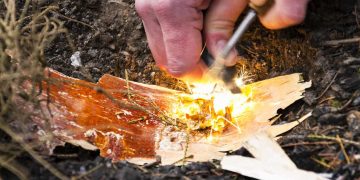
Perhaps the most iconic fire-starting method, the flint and steel technique involves striking a piece of steel against flint to create sparks. The sparks then land on a piece of tinder, which, when properly arranged, catches fire.
Materials Required:
- Flint (or another hard, sharp rock)
- Steel (often in the form of a fire steel or striker)
- Tinder (dry grass, leaves, cotton balls, etc.)
How It Works:
Flint is a type of rock that, when struck against steel, creates small shards of metal that are hot enough to ignite tinder. The friction between the two materials produces sparks, which is why it’s crucial to have tinder that catches easily.
Pros:
- Reliable and can work in various weather conditions.
- Lightweight and compact.
Cons:
- Takes some practice to perfect.
- Requires dry tinder.

2. Bow Drill Method
The bow drill is an ancient technique that requires a little more effort and skill than flint and steel, but it’s one of the most satisfying ways to start a fire.
Materials Required:
- A bow (a flexible stick with cord tied around it)
- A spindle (a straight, dry stick)
- A hearth board (a flat piece of wood with a small notch cut in it)
- A bearing block (a smooth piece of wood to help rotate the spindle)
How It Works:
You use the bow to rapidly rotate the spindle against the hearth board, creating friction. The friction generates heat, eventually forming an ember that you can transfer to your tinder.
Pros:
- Produces a strong ember for a sustainable fire.
- Traditional and effective method.
Cons:
- Requires a significant amount of physical effort.
- Not ideal for beginners.
3. Fire Plough
The fire plough is a simpler method, involving scraping a sharp, hardened stick (or piece of wood) over a dry, flat surface to create friction and heat.
Materials Required:
- A dry, smooth piece of wood (like cedar or pine)
- A sharp stick or piece of wood
How It Works:
By scraping the sharp stick over the wood surface, you produce friction. The friction causes tiny wood shavings to ignite and produce an ember, which can then be blown into flame.
Pros:
- Simple and requires no special tools.
- Great for areas with dry wood.
Cons:
- Limited to specific types of wood.
- Requires significant effort.
Modern Methods of Fire Starting
While traditional methods are great, modern tools can also come in handy for fire starting. Some of these methods are especially useful in emergencies, or when you need to save time.
1. Ferrocerium Rod
A ferrocerium rod, often referred to as a “firesteel,” is a modern version of the flint and steel technique. It’s a man-made material that, when struck with a sharp edge, produces a large number of sparks.
Materials Required:
- Ferrocerium rod
- Striker (a piece of metal or hard edge)
How It Works:
When you scrape the striker against the ferrocerium rod, the material produces hot sparks that can ignite dry tinder.

Pros:
- Works in all weather conditions, even when wet.
- Compact and long-lasting.
- Can produce thousands of strikes.
Cons:
- Requires a bit of technique.
- Needs dry tinder to be effective.
2. Solar Fire Starting (Using a Magnifying Glass)
Solar fire starting is one of the most environmentally friendly methods for starting a fire, and it relies on nothing but the sun’s energy.
Materials Required:
- Magnifying glass (or any convex lens)
- Tinder (dry grass, bark, leaves, etc.)
How It Works:
By focusing the sun’s rays through the lens, you concentrate the light into a single point, creating enough heat to ignite the tinder.
Pros:
- No fuel or matches needed.
- Works on sunny days.
- Completely sustainable.
Cons:
- Only works in sunlight.
- Requires precision and patience.
3. Fire Pistons
A fire piston is an ingenious tool that uses rapid compression of air to generate heat, similar to how a diesel engine works. It’s a fun method that’s effective if you have the right equipment.
Materials Required:
- Fire piston (a small tube with a piston)
- Tinder (preferably dry)
How It Works:
The fire piston creates a tiny, intense burst of heat by rapidly compressing air in a small chamber. When you push the piston into the tube, the heat is sufficient to ignite the tinder inside.
Pros:
- Fast and efficient.
- Fun and mechanical method.
Cons:
- Requires a special tool.
- Not practical for all situations.
Choosing the Right Fire-Starting Method
When it comes to fire starting, there’s no “one-size-fits-all” solution. The best method depends on your environment, your available materials, and your skill level.
- For Beginners: Ferrocerium rods or a magnifying glass are excellent choices because they are relatively easy to use.
- For Survivalists: Bow drills and fire pistons are more advanced, but they offer a deeper connection to traditional fire-starting methods and can be more reliable in certain conditions.
- For Emergencies: A solar fire starter or ferrocerium rod is ideal, as they are compact and can be carried in most survival kits.
Conclusion: Mastering Fire Without Modern Tools
Mastering the art of starting a fire without matches or lighters is not only a practical skill but a reminder of our resourcefulness as humans. Each method—whether it’s striking flint with steel, generating heat with a bow drill, or harnessing the power of the sun—offers a unique way to tap into nature’s raw energy.
By practicing these techniques, you’ll be ready for any situation where fire is needed, and you’ll also gain a deeper appreciation for the natural world and the simple tools that can make a big difference.