







Imagine you’re in a situation where calling out for help would make things worse — where the person hurting you or the threat in the room will instantly notice if you raise your voice, unlock your phone, or flash a bright light. Maybe you’re lost in fog and don’t want to startle nearby wildlife, or you’re in a hostile environment where visibility and privacy are at risk. Signaling for help without being detected is an art that blends psychology, preparation, context-awareness, and low-profile tools. This article gives a practical, professional, and (yes) interesting guide to doing exactly that — staying safe and getting help without escalating danger or drawing unwanted attention.
We’ll walk through the mindset, risk assessment, low-tech and higher-tech options (with safety caveats), covert signaling systems you can set up in advance, practical examples, what to do after help arrives, and ethical/legal considerations. This is about safety, not evasion of lawful authority or wrongdoing. If you’re in immediate danger, prioritize contacting law enforcement, emergency services, or local support resources in ways that keep you safe. Where standard channels aren’t safe, use the discreet methods below to connect with trusted allies or trained responders.
What “Without Being Detected” Really Means
First: define the problem. “Without being detected” can mean several things depending on context:
- Not alerting an immediate attacker or abuser — the goal is to signal someone who can help without the threat discovering the attempt.
- Not attracting general attention — you want help but can’t risk a public spectacle (e.g., near wildlife, hostile community, or confidential operation).
- Avoiding digital surveillance — you need to communicate without triggering notifications or logs that could tip off an adversary.
- Stealth during extraction — in rescue operations where overt action would worsen the situation (e.g., a covert rescue of a hostage).
Different situations demand different approaches. The unifying principle: minimize the signal’s perceptibility to the adversary while maximizing its interpretability to the intended helper.
The First Rule: Assess Risk and Plan for Safety
Before attempting any covert signal, take a brief — but clear — risk assessment.
- Who is the adversary? Are they likely to notice small changes (like a tone or a hand gesture), or only overt actions (shouting, running)? Tailor your signal complexity accordingly.
- What are the consequences if discovered? If discovery means immediate harm, choose only the safest, least noticeable methods or wait for a safer opportunity.
- Who is the recipient? Is it a nearby person, a remote responder, emergency services, or a close friend? The recipient’s ability and response time will shape what you send.
- What resources do you have? Phone, flashlight, mirror, ink pen, clothing, social accounts, or pre-arranged cues? Use what’s at hand.
- Environment? Indoors, outdoors, urban, wilderness — factors like light, noise, and bystanders matter.
If you have time, build redundancy: multiple, independent signals increase chance of help reaching you.
Principles of Covert Signaling
Keep these guiding principles in mind:
- Ambiguity is your friend. A signal that looks normal to an observer but meaningful to the recipient reduces danger.
- Simplicity wins. The simpler the signal, the fewer mistakes. Aim for signals that are easy to recognize under stress.
- Pre-arrangement is powerful. Signals agreed on in advance (a word, a gesture, a phone action) are far more reliable.
- Fail-safe and deniability. Your signal should be defensible as innocent if questioned and should not make things worse.
- Minimal digital footprint. If someone is monitoring your accounts or device, avoid creating logs that could incriminate or endanger you later.
- Redundancy. Multiple channels (visual + audio + text) increase the chance of success while retaining stealth.
Low-Tech Covert Signals (No Electronics)
These are often the safest because they leave little trace and can be executed with everyday items.
1. Pre-arranged verbal code words or phrases
A code word is a single word or phrase that sounds ordinary but signals distress. Examples: “Can you bring the blue mug?” or “Is Aunt Lucy arriving today?” They’re effective when exchanged in a public space where the adversary would not suspect anything.
How to use them well
- Keep the code natural in your conversational style.
- Do not repeat frequently; only use when necessary.
- Combine with a specific request: the sender says the code word and the recipient responds with a pre-arranged action (call police, leave immediately, bring up location).
Why it works
- To an outsider it’s normal speech; to the helper it’s a clear call to action.
2. Clothing or accessory cues
Wear or carry an item that means “I need help” when shown in a certain way: a scarf tied differently, turning a hat inside out, or putting a certain handkerchief in the pocket.
Best practices
- Use items you normally possess to avoid suspicion.
- The action should be subtle — folding, draping, or placing an item in a visible spot.
- Pre-assign different items to indicate urgency levels.

3. Gestures and body language
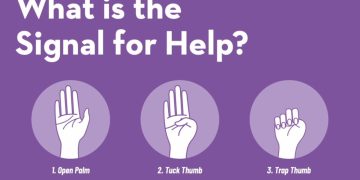
A subtle finger tap, touching the ear, or a specific way of holding a bag can be agreed signals. They’re especially useful in crowded or quiet spaces.
Risks
- Must be clearly understood by the helper to avoid false positives.
- Some gestures may be culturally recognized; choose gestures that won’t raise public alarm.
4. Visual markers in plain sight
Leave a discreet mark in a place where only a helper will look — for example, placing a book turned upside down on a bookshelf, or a toothbrush in a specific cup.
Useful for
- Households with a pattern of daily habits.
- Long-term planning when visits are infrequent but predictable.
5. Paper cards and notes
A small card with a simple message (“I need help”) tucked into a wallet, shoe, or pocket. This is low-tech and leaves no electronic trace.
Care
- Keep the note small and ordinary.
- Use non-gloss paper to avoid reflection if hiding in a visible place.
Low-Profile Tech Methods (With Safety Caveats)
Electronics are powerful but can leave evidence or trigger monitoring. Use them carefully and prioritize methods that minimize digital traces.
1. Silent text with pre-arranged content
A brief text message to a trusted contact that uses a pre-arranged phrase, then deletes it. Texts can be logged by carriers and show up in device notifications; consider these risks.
Safer variants
- Use an app that supports ephemeral messages (if you know it’s safe).
- Send from a burner device if available (but note purchasing and use may be traceable).
2. Vibration-only phone signals
An incoming call set to vibrate without lighting up the screen can be an unobtrusive signal. Pick a unique ringtone or contact name only the helper recognizes, then answer in a pre-arranged way.
Limitations
- If the adversary checks your phone or monitors calls, this can expose the attempt.
- Many modern phones show locked-screen notifications — disable in advance if safe to do so.
3. Camera-less photos or snapshots
A quick photo of surroundings sent to a trusted person can convey location. Ensure metadata (timestamps, GPS) are removed or disabled, and be mindful that sending images creates records.
4. Silent alarm or panic buttons
Many wearables and some apps have silent alarm features that send location to trusted contacts. Use only reputable services and understand they may log events or require internet connectivity.
Important
- Never rely on untested tools in a crisis. Test in safe conditions.
- Know whether the alarm triggers audible sirens — that could endanger you.
5. Wi‑Fi/Bluetooth-based signals
Short-range signals like Bluetooth beacons or Wi‑Fi SSID names can be used cleverly: broadcasting a specific SSID name might alert a nearby ally scanning networks.
Caution
- Requires technical knowledge and equipment.
- Public scanning can be noticed by tech-savvy adversaries.
Covert Signaling for Different Scenarios
Here are concrete strategies tailored to specific situations. These are practical yet conservative — avoid anything that could escalate danger or break laws.
Scenario: Domestic danger at home
- Pre-arranged phrase: Agree on a casual phrase that means “call police.” Use it peacefully in conversations with friends or neighbors.
- Neighbor alert: Keep a neighbor’s spare key or code with trusted neighbor (if safe). Have a knock pattern or text sequence that means “come to my house.”
- Code items: Place a specific shoe by the door or a towel over the railing to indicate a need for emergency access or a safe exit route.
- Emergency exit practice: Know routes and safe rooms. If possible, stage an accessible exit plan with trusted people.
Scenario: Public place with potential threat
- Subtle gesture: Brush your hair a certain way or tap a table in a pattern agreed upon beforehand.
- Phone-only signal: Use a text-only message with preset content to a trusted contact who can call emergency services on your behalf (if it’s safer than calling yourself).
- Seating cues: Change seats or hold belongings in a specific position that your ally recognizes as distress.
Scenario: Lost in wilderness but needing quiet help
- Mirror or reflective light: Brief, low-intensity flashes of reflection can attract attention without startling wildlife if performed in controlled bursts.
- Whistle with restraint: One whistle blast may be part of a pre-arranged pattern — avoid continuous noise that could attract dangerous animals.
- Ground marker: Arrange rocks or sticks into a simple arrow point, visible from above to rescuers, but not dramatic enough to attract nearby parties.
Scenario: Under surveillance by hostile party
- Ambiguous signals: Use ordinary behavior that is nevertheless meaningful to a helper — a specific book left on a table, or a changed social media post using a phrase only a few understand.
- Out-of-band check-in: Arrange for a routine check-in (daily message at noon). Missing the routine triggers a pre-arranged escalation.
Building a Covert Signaling System: A Step-by-Step Framework
Here’s a practical framework you can use to design your own low-profile signaling system.
Step 1 — Identify trusted nodes
Who can realistically help? Law enforcement, neighbors, friends, family, coworkers, or specialized hotlines. Map their proximity, availability, and reliability.
Step 2 — Establish signals tailored to the helper
Choose signals that your helper will notice but others won’t — a phrase, a gesture, or a physical cue. Keep it no more than one or two distinct signals to minimize confusion.
Step 3 — Define actions for the helper
What should your helper do on receipt? Call 911, show up at the address, contact a designated safe person, or alert a rescue team? Make the required action explicit but simple.
Step 4 — Agree deniability and risk tolerance
Decide what the signal will look like under scrutiny and whether the deniability is politically or socially acceptable.
Step 5 — Train and rehearse
Practice reduces errors. Rehearse once or twice in safe settings so the helper won’t hesitate during an emergency. Keep rehearsals discreet.
Step 6 — Create redundancies
At least two independent ways to signal: one physical, one digital, or two physical. If one method fails, the other may succeed.
Step 7 — Maintain and update
Review your system periodically (monthly or before travel). Update as contexts change — new roommates, new job, different environment.
Psychological and Social Considerations
Human factors matter more than gadgets.
- Stress and perception: In high stress, people misinterpret signals. Keep your signal simple and unmistakable to the agreed parties.
- False positives and consequences: Too many false alarms erode trust. Use signals sparingly and only when necessary.
- Cognitive load: If victims are in a high-control relationship, complex signals won’t be executed reliably. Favor the simplest possible actions.
- Privacy and stigma: Some people may fear asking for help publicly. Ensure that helper responses respect confidentiality and minimize exposure.

Legal and Ethical Considerations
Signaling for help is legitimate, but be mindful:
- Avoid illegal actions. Do not disable surveillance equipment, tamper with locks unlawfully, or engage in actions that could escalate legal risk.
- Respect privacy and property. Asking a neighbor to break a lock is not recommended — instead ask them to contact emergency responders.
- Honesty with responders. Misleading authorities can complicate rescue efforts. Be clear about urgency while prioritizing your safety.
- Professional help for abuse. In cases of abuse, contact local domestic violence organizations which often have proven, confidential protocols for discreet help.
Tools and Items to Keep at Hand (Non-Technical and Low-Risk)
A little preparedness goes a long way. These items are innocuous but can become useful signals or tools:
- Paper and pen: Small, foldable note for discreet messages.
- Silk scarf or bandana: Can be repositioned subtly to signal.
- Hand mirror / compact: Use for discreet reflection signals.
- Spare charger or battery: Useful for powering a device if needed.
- Small whistle: Use sparingly in wilderness or controlled settings.
- Physical “help” card: A tiny card in a wallet that can be slid out subtly.
Keep these in places where you can access them quickly but where an aggressor wouldn’t expect them.
Communication Templates: What to Say and How
Here are short templates you can adapt. Keep messages minimal and pre-arranged.
- Text to trusted friend (domestic risk): “Can you check on me? Say yes if you can.”
— Helper replies “On my way” or calls emergency services. - Public phrase (code word): “Are we still on for the blue mug?”
— Helper calls police or designated contact if response is affirmative. - Wilderness emergency SMS: “White tent / green jacket” (prearranged meaning: I need extraction at coordinates I’ll send).
— Sender follows with GPS coordinates only if safe. - Neighbor knock pattern: Knock three times slowly, pause, knock twice quickly.
— Neighbor calls emergency services rather than entering.
These are starting points — personalize them and ensure the recipient fully understands the desired action.
Mistakes to Avoid
- Overcomplicating signals. Too many steps lead to failure.
- Using obvious emergency cues in front of the adversary. Silence can be safer.
- Relying on a single person. People are unavailable; have backups.
- Ignoring technology vulnerabilities. Digital traces exist — assume your device may be inspected.
- Not rehearsing. A great plan on paper can fail under stress.
When to Use Loud, Overt Signals Instead
There are times when stealth is not the right strategy — when immediate intervention is needed and the threat is imminent and imminent harm outweighs the risk of detection. Use loud signals (shouting, sirens, continuous whistle blasts) when:
- The danger is immediate and physical.
- You are in a public place where help can arrive quickly.
- Remaining silent will likely result in harm.
Always choose the option with the highest probability of preserving life and safety.
After Help Arrives: Steps to Take
Getting help is only the beginning. After rescue or intervention:
- Ensure immediate medical needs are addressed. First aid, hospital care if needed.
- Secure evidence safely. If relevant (abuse, assault), preserve records where possible — but only if it’s safe to do so.
- Follow up with trusted support. Counselors, hotlines, victim advocates.
- Change and secure accounts and devices. If your digital privacy was compromised, change passwords from a safe device and consider professional help.
- Document the event. Create a private, timestamped record of what happened to assist responders later.
Building Community-Level Covert Signals
Communities can build low-profile systems to help vulnerable members without creating alarm. Examples include:
- Retail “ask for ____” codes. Many services train staff that when a customer says “Can I speak with the manager about product X?”, it triggers a discreet safety protocol.
- Neighborhood watch quiet signals. A light shown briefly in a window at night that neighbors recognize as a distress cue.
- Workplace protocols. HR can set up a discreet report channel using an agreed keyword that routes to security.
Such systems require training, confidentiality safeguards, and legal oversight.
Final Checklist: How to Prepare Today
- Pick and rehearse one verbal code and one physical cue with at least two trusted people.
- Store a compact “help” note and a pen in your everyday bag.
- Know two exit routes from frequently visited places.
- Keep one low-profile tech solution (like an emergency contact on speed-dial) but understand its risks.
- Make a short written plan and hide a copy in a safe place.
- Identify local resources (hotlines, shelters, rescue services) and save their numbers safely.
A Few Realistic Examples (Short vignettes)
- City cafe: Maya sits with a controlling partner. She prearranged with her best friend that the phrase “Did you bring the biscotti?” means to call the police. She says it casually to the friend on the phone; the friend calls for help while Maya keeps calm, and emergency services are dispatched without the partner noticing the panic.
- Hiking alone: Liam realizes he’s off-trail near dusk. He uses a compact mirror to send a short flash pattern (three pulses) toward a ranger station he knows is on a ridge. The flashes are brief and directed, catching the ranger’s eye without drawing animals to a noise.
- Hostile surveillance: Fatima uses an innocuous social media post with a subtle phrase she had agreed on with her sister (“Remember our summer picnic?”). Her sister recognizes it and alerts local authorities; because the post was phrased as normal, it does not raise suspicion immediately.
These underscore the rule: pre-arrangement + subtlety + redundant channels = best chance of safe rescue.
Closing Thoughts
Signaling for help without being detected is a blend of foresight, psychology, and practical improvisation. There is no single “best” way — the most effective method depends on your environment, the nature of the threat, the helpers available, and the acceptable level of risk if the attempt is discovered. Keep plans simple, make them deniable, rehearse with trusted people, and prioritize your immediate safety above all.
Remember: preparation beats panic. Spend a little time setting up simple cues and contacts — that small investment can be life-saving when it truly counts.